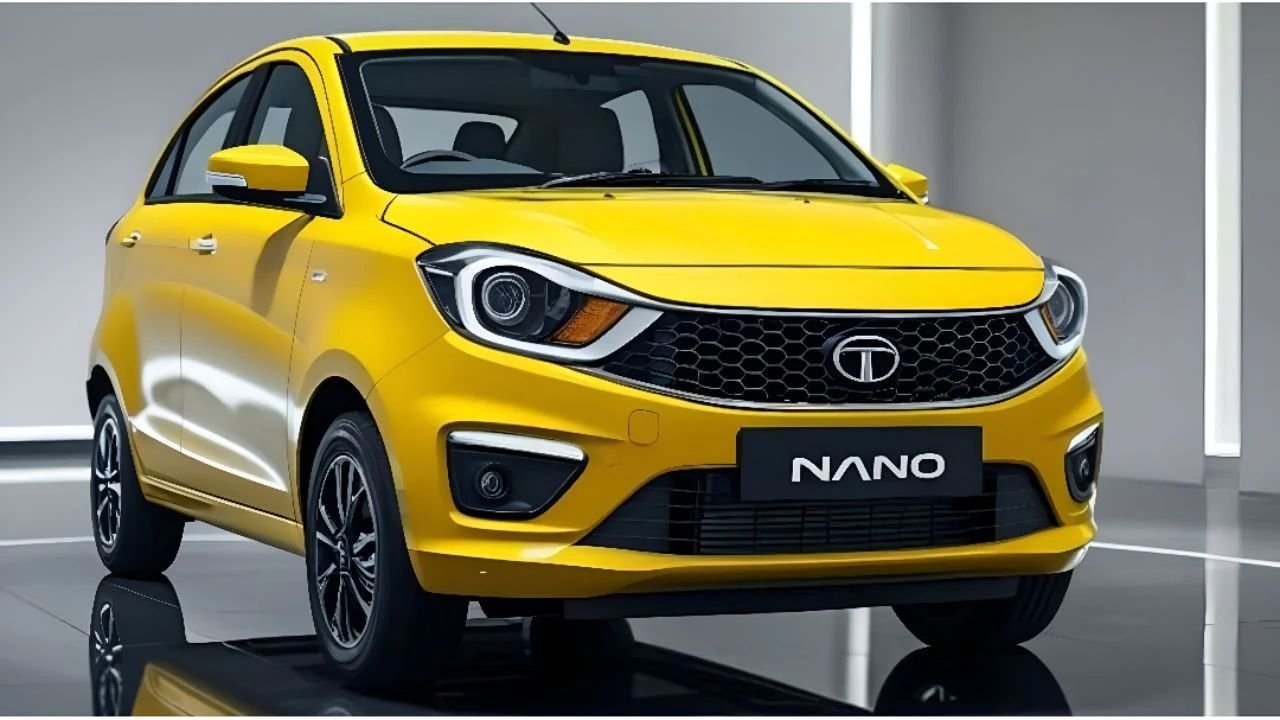

When the Tata Nano was first unveiled to the Indian public, it created a ripple of excitement across the nation. Dubbed the “people’s car,” the Tata Nano wasn’t just a vehicle; it was a vision to transform how the average Indian family accessed personal mobility. Designed with the goal of offering a four-wheeled alternative to two-wheelers, this small yet significant car captured the hearts of lakhs of middle-class Indians.
The Tata Nano gained fame for combining affordability, fuel efficiency, and practicality, all wrapped up in a compact frame. Even today, years after its discontinuation, this car’s legacy continues to spark discussions on economical transportation and innovation in the Indian automobile sector.
The Origin Story: Birth of the New Tata Nano
The New Tata Nano was launched by Tata Motors in 2008 with a singular, groundbreaking aim — to deliver an affordable car that could redefine mobility for Indian households. With a shocking starting price of just ₹1 lakh, it became the world’s cheapest car at the time. But it wasn’t about being cheap — it was about being accessible.
The idea was championed by Ratan Tata, who envisioned a safe and dignified mode of transportation for families riding on two-wheelers. The New Tata Nano thus emerged as a symbol of innovation, safety, and hope. It offered four seats, a small rear-mounted engine, and a lightweight body — all designed to provide mobility at an unbeatable cost.
Tata Motors engineered this vehicle from the ground up. It was more than just a car; it was an answer to the needs of the average Indian family living in crowded cities or semi-urban areas with limited road infrastructure. The New Tata Nano was compact, simple, and extremely cost-effective — a dream come true for countless families who had never imagined owning a car.
What Made the New Tata Nano Unique
There were several reasons why the New Tata Nano became an instant hit:
- Compact Yet Roomy: Despite its tiny external dimensions, the car was cleverly designed to offer impressive interior space. Four adults could sit comfortably without feeling cramped.
- Rear-Engine Layout: The 624cc two-cylinder petrol engine was mounted at the rear, freeing up space at the front and improving weight distribution. It also made maintenance easier.
- Exceptional Mileage: One of the biggest strengths of the New Tata Nano was its fuel economy. With mileage figures ranging from 20 to 25 km/l, it was a dream car for budget-conscious families.
- Game-Changing Affordability: Priced around ₹1 lakh initially, it made four-wheelers accessible to families who were previously dependent on scooters and motorcycles.
- Ease of Handling: Thanks to its compact size and small turning radius, driving and parking in crowded Indian streets was a breeze.
- Upgrades Over Time: Later variants of the New Tata Nano offered features like power steering, air conditioning, improved safety features, and even automatic transmission in the GenX version.
Key Specifications of the New Tata Nano
| Feature | Details |
|---|---|
| Manufacturer | Tata Motors |
| Launch Year | 2008 |
| Engine | 624cc, 2-cylinder petrol engine |
| Mileage | 20–25 km/l |
| Seating Capacity | 4 people |
| Top Speed | Approx. 100 km/h |
| Transmission | Manual (initial) / AMT (later models) |
| Notable Features | Rear engine, compact body, improved interiors |
| Safety Upgrades | Improved crash structure, enhanced braking, seat belts |
How the New Tata Nano Became the Ideal Family Car
The genius of the New Tata Nano was that it wasn’t trying to be a premium sedan or an SUV. It was unapologetically modest — a basic car for basic needs. And in that simplicity, it found its strength. It was the ideal vehicle for small families with limited income.
ALso Read : Tata Nano 2025 – Affordable, Stylish, and City-Friendly with ₹1.25 Lakh Down Payment & ₹7,500 EMI
Families with two children found the four-seat layout ideal. The low running and maintenance costs ensured that ownership didn’t strain monthly budgets. The compactness meant it was easy to navigate through congested roads or squeeze into tight parking spots — a blessing in cities like Delhi, Mumbai, or Bengaluru.
The New Tata Nano also offered enough luggage space for groceries, school bags, or even weekend travel essentials. Despite its price tag, it didn’t feel like a compromise — it felt like liberation.
Challenges Faced by the New Tata Nano
While the New Tata Nano started off strong, its journey wasn’t without hurdles. Some of the challenges it faced included:
1. Perception Problems
Being called the “cheapest car” unfortunately created an image of being “low quality.” Many potential buyers felt that owning a Nano didn’t match their aspirations. Instead of being celebrated for affordability, the New Tata Nano was often looked down upon socially.
2. Safety Concerns
In its early years, there were instances of the car catching fire, which created a storm in the media. Though Tata Motors quickly addressed the issues with technical fixes and newer models had better safety, the early damage to its reputation was hard to undo.
3. Evolving Market
As time passed, the Indian car buyer’s expectations began to rise. Even first-time buyers wanted better interiors, infotainment, power windows, and more safety features. In this changing landscape, the basic nature of the New Tata Nano felt outdated.
4. Competition
With companies like Maruti Suzuki and Hyundai offering slightly more expensive yet better-featured hatchbacks, the Nano’s niche began shrinking rapidly.
Eventually, in 2018, Tata Motors made the tough decision to end the production of the New Tata Nano, marking the end of a significant era in Indian motoring.
Why the New Tata Nano Still Holds Value in 2025
Even though it’s no longer in production, the New Tata Nano still holds nostalgic and practical value in 2025. It is still widely found in the used car market, with decent resale value due to its low running cost. Many small-town families and college students still prefer the Nano as their first vehicle.
More importantly, the New Tata Nano continues to be a case study in innovation. It showed that minimalism, when combined with smart engineering, could lead to a revolution. The car inspired conversations around micro-mobility, sustainable transport, and affordability.
As India moves towards electric vehicles and smart cities, many believe a reimagined New Tata Nano — possibly electric, with updated safety and tech — could be a game-changer once again.
What Made People Love the New Tata Nano
- Price Advantage: There was simply no car in the world that offered so much at such a low price.
- Fuel Savings: With rising fuel prices, the Nano’s mileage was a godsend for middle-income families.
- Perfect for City Use: It could navigate traffic, sharp turns, and narrow alleys with unmatched ease.
- Simplicity: No complicated tech. Just a reliable, easy-to-maintain car that did its job.
- Low Ownership Cost: Servicing, insurance, and spares were all very affordable.
FAQs About the New Tata Nano
Q1. How many people can the New Tata Nano seat?
The car is designed to seat four adults comfortably — ideal for nuclear families.
Q2. What is the mileage of the New Tata Nano?
It offers an average mileage between 20 to 25 km/l, depending on driving conditions.
Q3. Is the New Tata Nano still sold in showrooms?
No, it was discontinued in 2018. However, used models are widely available in the second-hand market.
Q4. Is the New Tata Nano safe?
Later versions of the car had improved safety features like crumple zones, seat belts, and better structural integrity.
Q5. Is the New Tata Nano good for long drives?
While it was built for city use, many owners have successfully taken the Nano on long highway trips without issues.
Conclusion: The New Tata Nano — A Legacy of Innovation and Affordability
The New Tata Nano was never just a car — it was a social movement. It dared to bring dignity and comfort to Indian families who were otherwise confined to two-wheelers. It redefined affordability, reshaped public mobility, and challenged global norms of automotive pricing.
Though its commercial journey ended in 2018, the New Tata Nano continues to live on — in memories, second-hand markets, and as a source of inspiration. If ever there was a car that proved “less is more,” it was the New Tata Nano.
And who knows? If Tata Motors decides to reintroduce this legend with an electric heart, smart tech, and enhanced safety, the New Tata Nano might just rise again — stronger, smarter, and more relevant than ever before.
Some Important Link
| Download News APP | Click Here |
| WhatsApp Group | Click Here |
| Home Page | Click Here |